
Jerry Seinfeld | Why We Keep Seeking Moral Guidance from the Famous

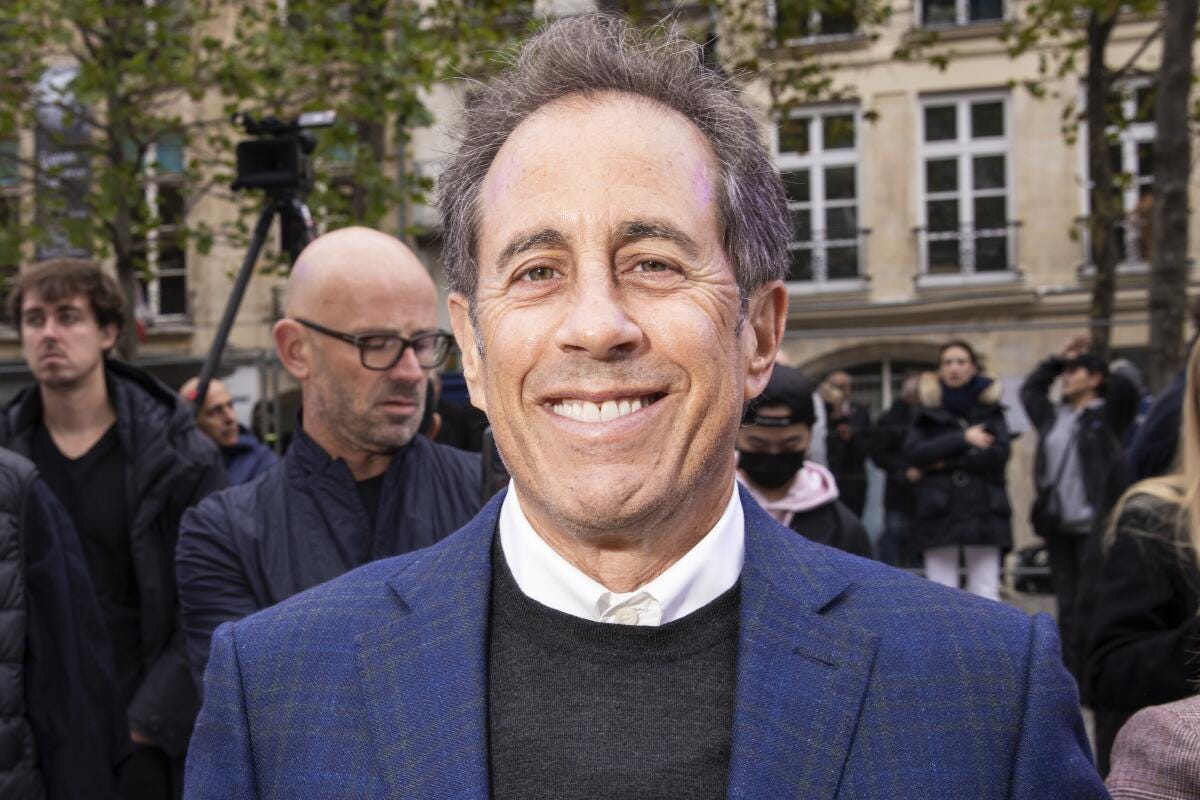
It was supposed to be a standard Tuesday night at Madison Square Garden. The Knicks had just scraped by with a 107-106 win, the crowd was buzzing, and for a few hours, the intensity of the NBA Finals had offered a familiar, comfortable distraction from everything else happening in the world.
Then came the ten-second video clip that shattered the illusion.
As Jerry Seinfeld walked out of the arena, a digital content creator shoved a phone into his orbit, demanding he chant, “Free Palestine.” Seinfeld didn’t stop, didn’t pivot to a press conference-style answer, and didn’t offer a nuanced take on Middle Eastern history. He simply chuckled, tossed out a dismissive “It doesn’t exist,” and kept moving. By the time he reached his car, the clip was already being weaponized across the internet, serving as the latest flashpoint in an ongoing, brutal culture war.
The Lure of the Idol
Why does this matter? Why do we care, genuinely, what a comedian thinks about international borders while he’s trying to catch a taxi?
We live in an era where celebrity has replaced traditional pillars of community and moral authority. We treat our icons not just as entertainers, but as surrogates for our own values. Psychologists call this a “parasocial relationship,” an imagined intimacy where we feel connected to someone who doesn’t know we exist. Because we feel that connection, we subconsciously expect them to be the loudest voice for our own moral convictions.
When a celebrity says something that aligns with us, we feel vindicated. When they don’t, we feel personally betrayed. It’s a dangerous cycle that turns public discourse into a game of “us versus them,” rather than a pursuit of truth.
The Weight of Influence
Celebrities aren’t just famous, they are engines of influence. When a public figure speaks, their words reach millions with a speed and force that actual policy experts, diplomats, and journalists rarely achieve.
Their reach is undeniable. An endorsement from a celebrity can move thousands of people to register to vote in a single day. But this power comes with a fundamental problem, fame is not a proxy for wisdom. Expertise in timing a punchline or executing a jump shot does not confer expertise in international law or the nuances of humanitarian crises.
When we treat a celebrity’s off-the-cuff remark at a sporting event as a definitive moral stance, we are the ones who have lowered the bar. We are prioritizing soundbites over substantive policy discussion and looking for validation from a pedestal that shouldn’t be there in the first place.
Deconstructing the Celebrity Pedestal
The truth is, Jerry Seinfeld is just a man, a very wealthy, very famous man, but a man nonetheless. He has his personal history, his specific biases, and his own set of experiences that inform his worldview. By demanding that he function as our moral compass, we are setting him up to fail and setting ourselves up for constant, performative outrage.
This isn’t about giving anyone a pass. It’s about recognizing that our culture of “celebrity-as-arbiter” is hollow. When we insist that every actor or athlete must validate our political reality, we aren’t creating a more informed society; we’re just creating a more polarized one.
The tragedy of the “Garden confrontation” isn’t just that Seinfeld said something that offended half the internet. The tragedy is that we are so starved for moral leadership that we’re asking comedians to provide it, and then we’re stunned when they give us nothing more than a shrug and a quip.
Thanks for checking out The Kicker with Ashlee Banks. Let me know your thoughts below.
For more news be sure to subscribe to The Kicker and follow Ashlee Banks on Twitter, TikTok and Instagram @ashleembanks.
Charles Barkley: "I am not a role model." Don't conflate celebrity with righteousness. You'll end up disappointed every time. From religion, to politics, to sports, notoriety is not nobility.
There are certain lines that you do not cross in life. There are certain things that should bring us together and expertise in any area is not relevant here
Paedophilia bad. Genocide bad. It isn’t a celebrity thing. It’s a human bond that folks are looking for. I think it natural that they seek out those voices from the influential and powerful. And unless you have been locked away somewhere, you know that the comedians HAVE been giving us basic human moral clarity. Colbert - Kimmel - Oliver - Meyers to name a few. I think Seinfeld came through loud and clear. He may be rich he may be famous but he is also human He was being asked a question that every human should be asked.