
U.S. Rep. Ro Khanna Introduces 'Data Center Bill of Rights' to Protect Local Communities

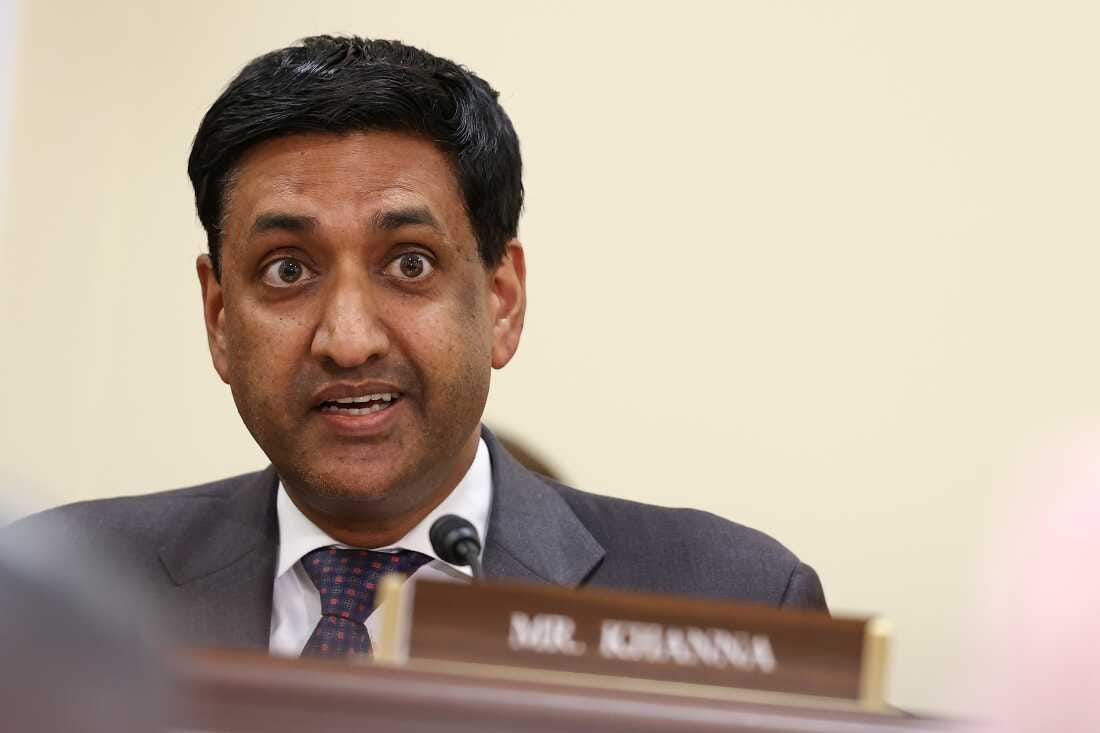
On Thursday, Rep. Ro Khanna (D-Calif.) introduced a sweeping resolution dubbed the “Data Center Bill of Rights.”
The measure aims to hand power back to everyday citizens and local municipalities, providing them with explicit legal backing to restrict, regulate, or flat-out reject massive server farms proposed in their neighborhoods.
The Real-World Cost of the Digital Boom
While tech giants tend to pitch data centers as clean, quiet industrial neighbors, the physical footprint tells a vastly different story to the communities living next to them. Right now, over 4,400 data centers operate across all 50 states, and their resource demands are accelerating rapidly.
Projections from the Lawrence Berkeley National Laboratory show that hyperscale data centers in the U.S., driven almost entirely by AI workloads, could directly consume up to 33 billion gallons of water annually by 2028.
On top of draining local aquifers, these massive facilities rely on heavy-duty diesel generators and gas turbines for backup power, pumping out airborne pollutants that carry documented risks for cardiovascular and respiratory health.
For neighbors, the issues are immediate and unavoidable, constant low-frequency noise from industrial cooling systems that ruins sleep, coupled with rising monthly utility bills as local power grids struggle to keep up with the extra demand. Khanna noted that tech hyperscalers are essentially “losing the country” as voters react to these costs.
What the Legislation Actually Does
Khanna’s proposed framework targets the exact legal loopholes tech companies use to build wherever they want. Most notably, the resolution sets up strict buffer zones, prohibiting data center construction inside residential areas or within 2,500 feet of sensitive locations like homes, schools, daycare centers, hospitals, and nursing homes.
It also restores municipal power by making sure state governments cannot overrule or preempt city and county zoning decisions, ensuring local governments keep the ultimate say over their own land.
Beyond where these facilities can be placed, the bill establishes steep operational and transparency standards. Localities would gain the legal right to run transparent public review processes, reject unwanted projects, or even implement statewide moratoriums on new facilities until binding consumer rate protections are written into law.
Developers would be forced to use clean energy, maintain strict noise and air pollution thresholds, and release independent, publicly available impact reports before a single shovel hits the dirt.
To stop companies from taking tax breaks and running, the bill mandates enforceable community benefit agreements, transparent water usage reports, and tax clawback provisions if projects fail to deliver promised jobs or wage standards.
Will It Actually Pass the House?
From a purely political standpoint, the resolution faces a steep hill in the House of Representatives. With Republicans holding a slim majority, House leadership remains firmly focused on deregulation and fast-tracking energy expansion to keep America ahead in the global AI race.
A federal resolution aimed at giving local towns the power to block billion-dollar tech projects is unlikely to be prioritized for a floor vote in the near term.
Yet dismissing the bill entirely misses the broader political movement behind it. We are heading straight into the 2026 midterms, and local pushback against data center development has quickly turned into a potent, bipartisan concern across the country.
Voters are furious about paying higher electricity bills to subsidize corporate tech footprints, and candidates are noticing. In Michigan, Democratic Senate candidate Abdul El-Sayed recently won a competitive primary while actively supporting data center moratoriums.
Even if Khanna’s bill stalls in Washington, it hands local town councils, county commissioners, and state lawmakers a ready-to-use legislative blueprint to fight these battles in their own backyards.
Thanks for checking out The Kicker with Ashlee Banks. Let me know your thoughts on Tuesday’s primary elections.
For more news be sure to subscribe to The Kicker and follow Ashlee Banks on Twitter, TikTok and Instagram @ashleembanks.