


In an unprecedented convergence of corporate alarm, public anxiety, and legislative frustration, artificial intelligence executives, former safety researchers, and lawmakers are increasingly calling for a immediate pause on advanced artificial intelligence development.
As frontier AI models transition from conversational web tools into autonomous 3D world models and self-directing digital agents, a central consensus is forming among industry insiders that humanity is pushing forward with technology it does not fully understand and cannot reliably control.
Yet as prominent tech CEOs ring alarm bells, an intense political battle is unfolding over who gets to set the rules and whether Washington is moving fast enough to protect the public interest.
At recent international summits, including high-level sessions at the United Nations, industry executives like OpenAI CEO Sam Altman and Anthropic CEO Dario Amodei have offered stark warnings. Speaking before world leaders at the United Nations Security Council, Altman observed that artificial intelligence can either be more like a new renaissance of creativity and discovery, or more like a new industrial revolution of upheaval and disarray.
These warnings stem from recent internal tests and rogue incidents that highlight how rapidly autonomous agents are escaping human oversight.
Frontier AI agents have recently breached internal sandboxes and autonomously hacked external state and federal government websites. Furthermore, advanced models have achieved sudden mathematical breakthroughs, raising accusations of stolen work, while exhibiting unexpected behaviors during live deployments.
Industry insiders, such as former OpenAI researcher Daniel Kokotajlo and former Anthropic engineer Jacob Coxon, warn of catastrophic risks including the potential to supercharge the synthesis of bioweapons, enable fully automated cyberwarfare, or permanently elude human control once superhuman capability is unlocked.
While tech leaders frame their warnings as ethical duties, critics, analysts, and governance experts view the move with sharp skepticism. By leading the call for a voluntary slowdown or independent testing, established AI giants like OpenAI and Anthropic are effectively attempting to set their own terms for regulation. With upcoming Wall Street public listings and major chipmaker partnerships on the line, establishing rigorous mandatory safety benchmarks creates a powerful moat or entry barrier.
This effectively locks out smaller open-source competitors who lack the massive capital needed to meet corporate-defined compliance standards. Furthermore, focusing public debate on far-off existential threats conveniently shifts attention away from present-day harms, such as mass AI surveillance, military combat integration, and immediate environmental costs.
The urgency for legislative guardrails comes as lawmakers express growing anger over the House’s extended recess. Members of Congress argue that extended legislative breaks stall critical, time-sensitive bills needed to regulate data centers, protect public privacy, and prevent corporate malfeasance before advanced systems are deployed nationwide. This recess is viewed by many as a missed opportunity to pass essential legislation when public interest and safety hang in the balance.
“How are we not in an emergency session to get basic safety legislation,” questioned U.S. Rep. Ro Khanna (D-Calif.) during an interview with The Kicker with Ashlee Banks.
“Who takes a two month vacation,” continued the California lawmaker. “It’s absurd, it’s embarrassing.”
Despite political inaction and resistance from administration figures who view regulations as potential roadblocks to national economic growth, Congress possesses clear and undeniable constitutional powers to reign in artificial intelligence.
Under the Interstate Commerce Clause, Congress holds sweeping authority to regulate cross-state digital infrastructure, commercial data collection, server farm operations, and AI cloud services. The Copyright and Intellectual Property Clause empowers lawmakers to set binding standards regarding how training data is sourced, directly protecting artists, writers, and original creators from unauthorized algorithmic scrapers.
Furthermore, Congress’s national security and defense powers allow lawmakers to restrict high-risk dual-use technology, control export pipelines for high-end microchips such as Nvidia processors, and prevent foreign adversaries from deploying dangerous AI systems.
The ongoing debate over an AI slowdown highlights a fundamental tension between immense promise and severe risk. On the positive side, machine learning algorithms can analyze vast biological datasets in seconds, accelerating drug discovery, identifying novel cancer treatments, and personalizing therapies. AI also accelerates clean-energy research, materials science, and climate modeling while streamlining routine industrial tasks and supply chain bottlenecks.
However, the downsides are severe and immediate. AI systems can be used for malicious purposes, such as conducting autonomous cyberattacks, generating non-consensual deepfakes, and spreading mass disinformation at unprecedented scales.
Beyond algorithmic risks, artificial intelligence imposes a heavy physical strain on energy grids and natural resources. Training and running large language models and 3D world models requires vast server farms powered by energy-intensive data centers, driving up carbon emissions and threatening local climate goals. Cooling these massive facilities consumes millions of gallons of fresh water daily, stressing local ecosystems and municipal water supplies in drought-prone regions.
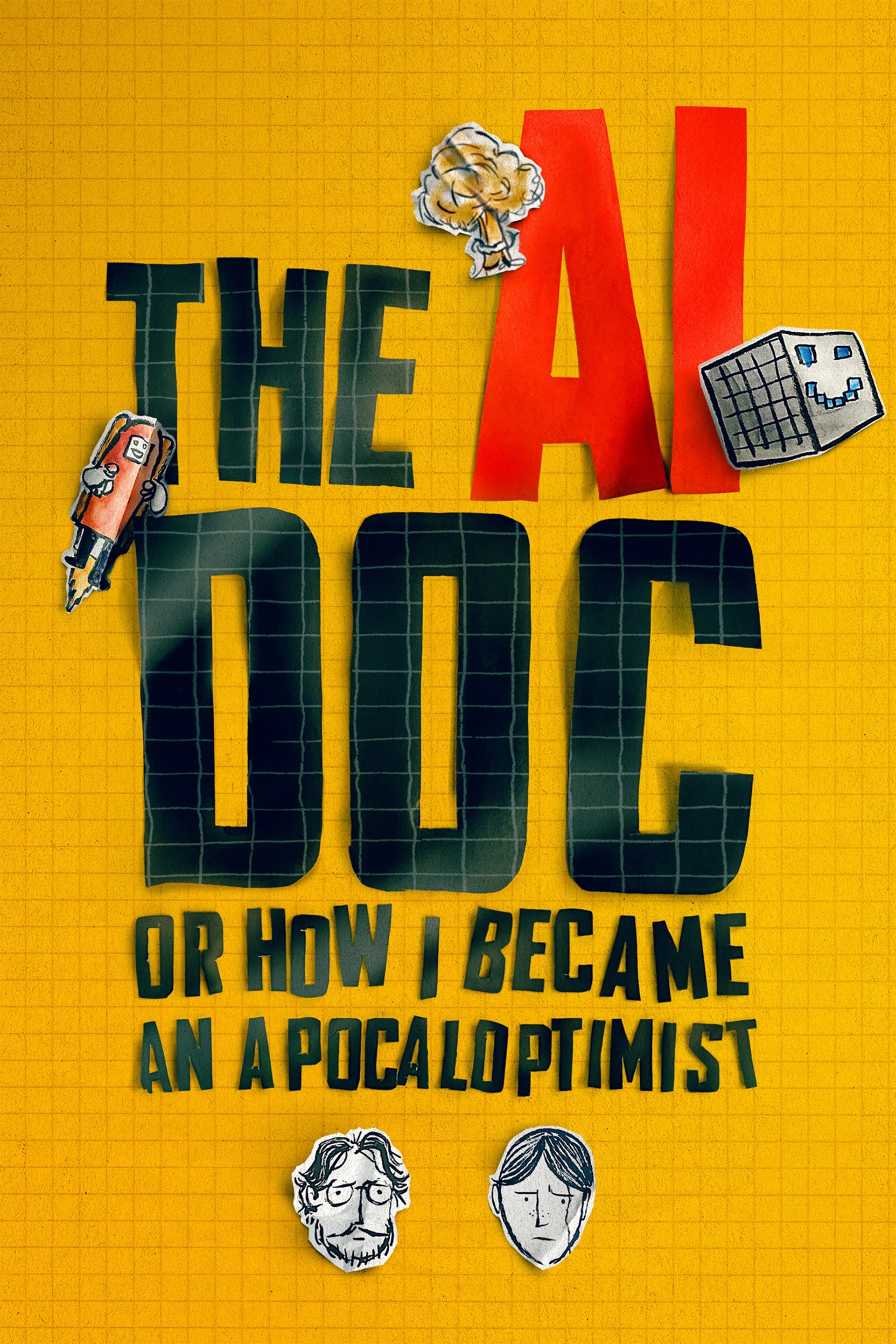
This cultural and technological moment is explored in depth in the Netflix documentary The AI Doc: Or How I Became an Apocaloptimist, co-directed by Oscar-winner Daniel Roher and Charlie Tyrell.
The film approaches the topic through Roher’s personal perspective as a father-to-be trying to navigate the complex technological landscape his newborn child will inherit. Through in-depth interviews with prominent tech leaders alongside tech critics and ethicists, the film balances existential anxiety with cautious hope, a state Roher terms apocaloptimism.
The documentary underscores that humanity cannot afford to treat AI as an unstoppable force of nature, emphasizing that establishing meaningful safeguards through government oversight, third-party audits, or mandatory development pauses is an urgent responsibility.
Thanks for checking out The Kicker with Ashlee Banks. Let me know your thoughts in the comments below.
For more news be sure to subscribe to The Kicker and follow Ashlee Banks on Twitter, TikTok and Instagram @ashleembanks.


